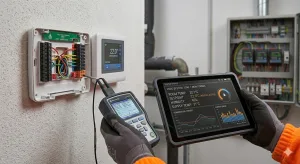
In a shop, a plant or a busy warehouse, electrical work is never just electrical work. Every hour the power is off is an hour the line is down, and every new machine has to be fed from a service that may already be close to its limit. Good light industrial electrical work starts with a plan that keeps production running while the job gets done properly.
This guide covers the three pieces that decide how smoothly a project goes: planning the shutdown, sizing the upgrade, and getting the permit and inspection sorted.
- What Counts as Light Industrial Electrical Work
- Planning a Shutdown That Stays on Schedule
- Upgrades for New Machinery and Growing Load
- Permits and Inspections for New Work
- Keeping the System Healthy Between Projects
- Frequently Asked Questions
What Counts as Light Industrial Electrical Work
Light industrial sites sit between a retail store and a heavy plant. Think fabrication and welding shops, small manufacturers, commercial kitchens, distribution warehouses, auto and equipment repair bays, and workshops with compressors, saws and lifts.
What they share is equipment that draws more power than an office ever will, and that often needs its own dedicated circuit. The electrical work on these sites tends to fall into a few groups:
- New circuits and connections for machines and equipment.
- Service and panel changes when the building outgrows its supply.
- Lighting upgrades for work areas, yards and loading docks.
- Emergency lighting, exit systems and surge protection.
- Repairs and preventative maintenance on existing equipment.
Each of these can be planned in a way that limits downtime. The rest of this guide shows how. For a full list of what we handle on these sites, see our light industrial services page.
Planning a Shutdown That Stays on Schedule
Much of the work on a panel or service has to be done with the power off. That is not something to improvise. A shutdown that runs long can cost more in lost production than the electrical work itself, so the planning is worth the effort.
- Walk the site first. We look at the panels, the equipment and the loads before setting a date, so there are no surprises on the day.
- Pick the quietest window. A slow day of the week, a holiday shutdown or a planned maintenance period all work.
- Map what goes dark. Make a list of every machine, freezer, server and alarm on the affected circuits.
- Line up materials ahead of time. Breakers, wire and fittings are on site before the power goes off.
- Plan the restart. Some equipment needs to come back on in a set order, or needs a person to reset it.
Where part of the operation cannot go down at all, such as refrigeration, the plan has to keep that equipment fed, for example from a circuit that stays live or from backup power. We set out the shutdown window and the steps in the quote, so your team can plan around it.
Upgrades for New Machinery and Growing Load
New equipment is the most common reason a light industrial site calls an electrician. Before a new machine arrives, check the manufacturer’s electrical requirements: voltage, phase and the size of circuit it needs. Sharing that sheet with us early saves a lot of back and forth.
The bigger question is whether the building can carry the extra load. Warning signs that the service is near its limit include:
- Breakers that trip when several machines start at once.
- Lights that dim when large equipment kicks on.
- A panel with no spare spaces left.
- Extension cords feeding equipment that should be hard-wired.
If those signs are there, adding one more circuit may only move the problem. A load review tells you whether the existing service can take the new equipment, or whether it is time to plan panel upgrades or a larger service. Doing that review before you buy the machine is far cheaper than finding out after it is on the floor.
For sites where an outage would stop the business, the same review is a good time to talk about backup power and generator installation.
Permits and Inspections for New Work
In most of British Columbia, including Kamloops, electrical installation permits are issued by Technical Safety BC. Its permit page says licensed contractors installing electrical equipment need an installation permit, and that a field safety representative (FSR) must be named on every application.
Once a phase of the work is done, the FSR declares that it complies and requests an inspection. Technical Safety BC then decides whether a safety officer will assess the work on site, so not every project gets a physical visit. A permit covering the final value and scope of the work has to be in place before the final inspection is requested.
For a business owner, the practical points are simple. Ask your contractor who is taking out the permit, make sure the scope on it matches the work being done, and keep the paperwork with your building records. As a licensed electrician, we confirm the permit requirements for each job before work starts, take out the permit for the work we do, and build any inspection steps into the project timeline.
Keeping the System Healthy Between Projects
Most unplanned shutdowns trace back to small faults that nobody saw: a loose connection heating up, a worn cord on a portable machine, a contactor near the end of its life. Planned projects fix what you know about. Regular electrical maintenance finds what you do not.
A practical routine for a light industrial site includes:
- Infrared inspections of panels and connections to spot hot spots early.
- Checking cords, plugs and connections on portable equipment.
- Testing emergency lighting and exit signs.
- Keeping panel directories accurate as equipment moves.
- Logging every repair so patterns show up.
Scheduling these checks during an existing shutdown window means the maintenance costs you no extra downtime.
Rooham Electric is a licensed electrician working with shops, warehouses and light industrial businesses in Kamloops, Sun Peaks and Tobiano. Whether you are adding a machine, outgrowing your service or planning a shutdown, we can walk the site with you and set out a plan that keeps your operation running. Visit our Kamloops electrician page to book a site visit.
Frequently Asked Questions
What is light industrial electrical work?
It is electrical work for shops, small manufacturers, warehouses and similar sites. Typical jobs include machine circuits, service upgrades, work-area lighting, emergency lighting and maintenance on equipment that draws more power than an office.
Does electrical work on my shop need a permit?
Installation work generally does. In most of BC, including Kamloops, Technical Safety BC issues the permit, and we take it out for the work we do.
Can you work around our production schedule?
Yes, that is part of the planning. We agree the shutdown window with you in the quote and line up materials beforehand so the power is off for as short a time as possible.
How do I know if my building can handle a new machine?
A load review answers it. We compare the machine’s electrical requirements with what the existing service and panel can supply, and tell you whether a new circuit is enough or an upgrade is needed.
What affects the cost of a light industrial electrical project?
The main drivers are the scope of work, whether the service needs upgrading, the equipment being connected, access on the site and how the shutdown has to be scheduled. We quote each project after a site visit.